
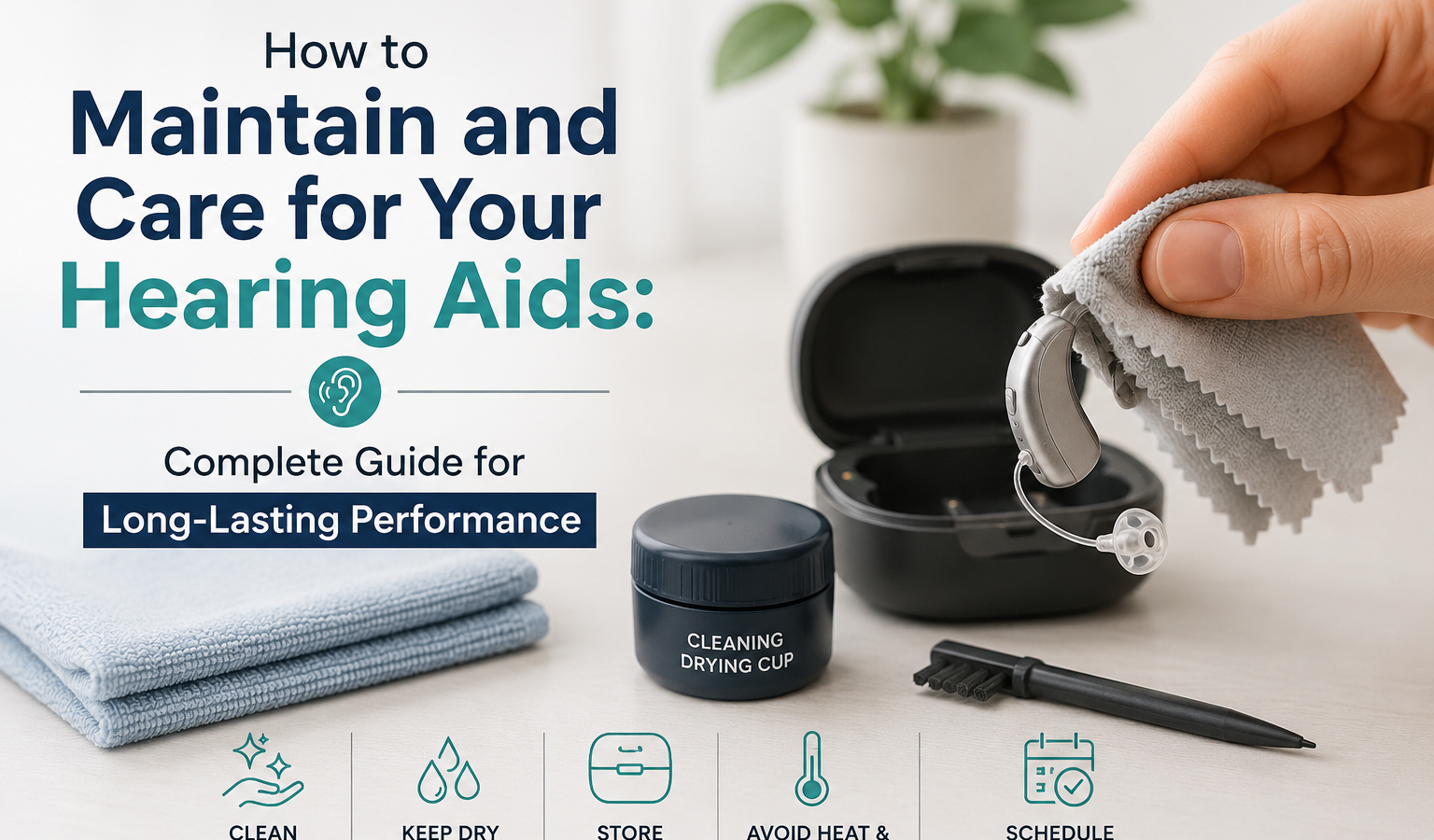
Hearing aids are life-changing devices that improve communication, confidence, and quality of life. However, like any electronic device, they require proper care and maintenance to function effectively for years. Poor maintenance can lead to reduced sound quality, frequent repairs, and even early device failure.
In this guide, we’ll explain how to maintain and care for your hearing aids so you can get the best performance and long-term value from your investment.
Why Hearing Aid Maintenance Is Important
Regular maintenance ensures:
- Clear and consistent sound quality
- Longer device lifespan
- Fewer repairs and breakdowns
- Better hygiene and ear health
- Improved performance in daily use
Neglecting care can lead to earwax buildup, moisture damage, and reduced amplification.
1. Clean Your Hearing Aids Daily
Daily cleaning is one of the most important habits.
How to clean:
- Use a soft, dry cloth to wipe the device
- Remove earwax using a cleaning brush or tool
- Clean microphone and speaker openings gently
- Never use water, alcohol, or cleaning chemicals
💡 Tip: Clean your hearing aids every night before storing them.
2. Keep Hearing Aids Away from Moisture
Moisture is one of the biggest enemies of hearing aids.
Avoid:
- Wearing them in heavy rain without protection
- Using them while swimming or bathing
- Storing them in humid environments
Best practice:
- Use a drying box or dehumidifier kit overnight
- Open battery doors when not in use
3. Change Batteries Regularly (or Charge Properly)
Battery issues are a common cause of hearing aid malfunction.
- Replace disposable batteries when sound becomes weak
- For rechargeable models, charge fully every night
- Keep spare batteries if you travel frequently
💡 Tip: Always keep battery contacts clean and dry.
4. Store Your Hearing Aids Properly
Proper storage increases device life.
- Store in a dry, cool place
- Keep them in their protective case
- Avoid leaving them exposed to dust or heat
- Keep away from children and pets
5. Protect Against Earwax Build-Up
Earwax is natural but can block sound output.
- Clean ears regularly (safe methods only)
- Use wax filters if your device has them
- Visit your audiologist for professional cleaning
6. Schedule Regular Check-Ups
Even if your device works fine, regular professional servicing is important.
You should visit a hearing clinic every:
- 3–6 months for cleaning and adjustment
- Immediately if sound quality changes
Audiologists can:
- Adjust settings
- Replace damaged parts
- Perform deep cleaning
7. Handle With Care
Hearing aids are delicate electronic devices.
- Avoid dropping them
- Do not twist or force parts
- Remove them carefully using both hands
- Keep away from small children
Common Mistakes to Avoid
- Using water or wet cloth for cleaning
- Sleeping with hearing aids on
- Ignoring reduced sound quality
- Delaying repairs or maintenance
- Storing without a case
Benefits of Proper Hearing Aid Care
When you maintain your hearing aids properly, you enjoy:
- Better sound clarity
- Comfortable listening experience
- Fewer repair costs
- Longer device lifespan
- Improved communication and confidence
Final Thoughts
Your hearing aids are an essential part of your daily life. With simple daily care and regular check-ups, you can ensure they work efficiently for years. Proper maintenance not only protects your investment but also improves your overall hearing experience.
If you experience any issues, always consult a qualified audiologist or hearing care professional.