
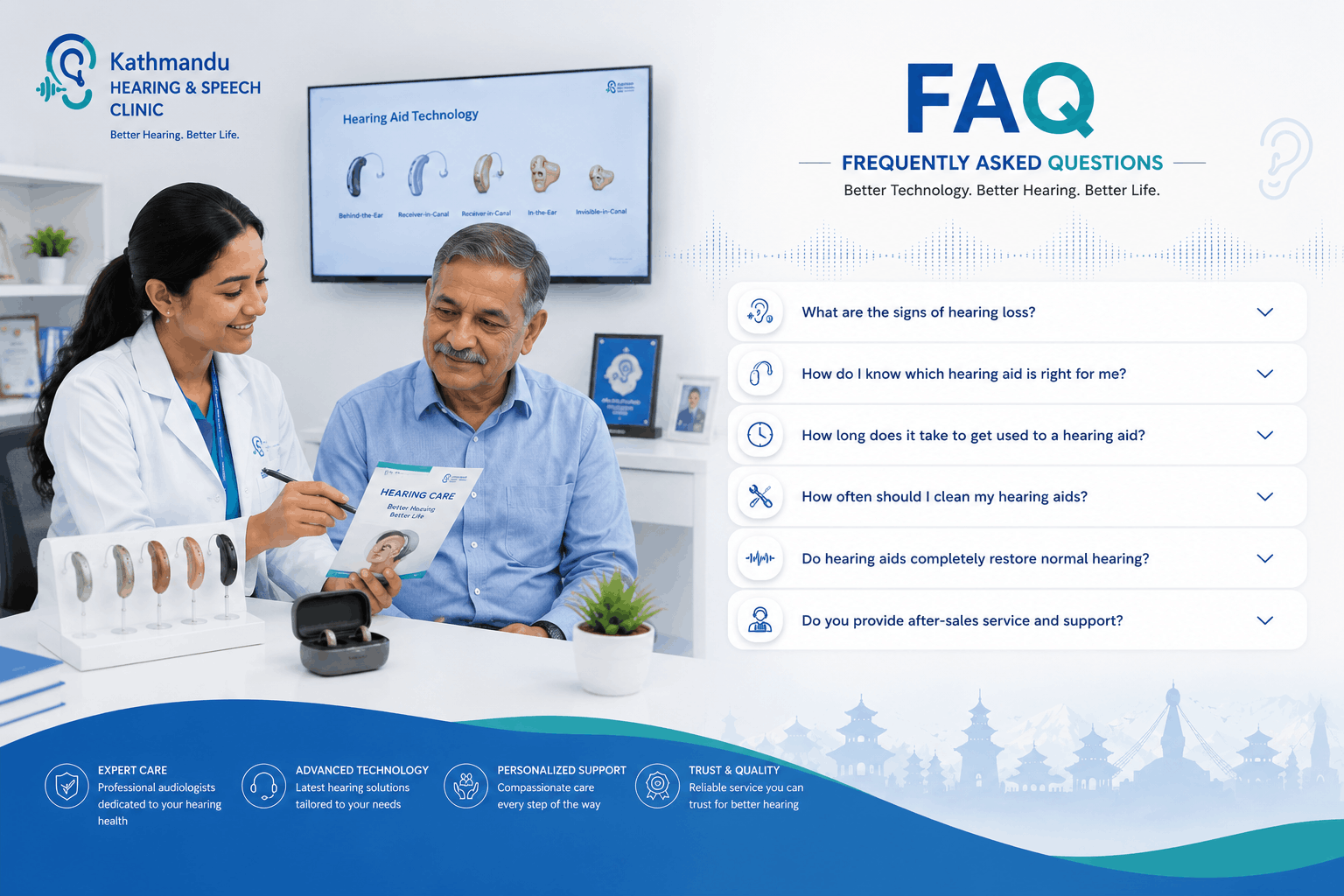
FAQ
Answers to common questions
Common signs include difficulty understanding conversations, asking people to repeat themselves, increasing TV volume, or experiencing ringing in the ears (tinnitus). A professional hearing assessment can determine the severity and type of hearing loss.
Hearing loss can occur due to aging, excessive noise exposure, infections, genetics, ear injuries, certain medications, or medical conditions.
Some hearing problems caused by infections or earwax blockage may be temporary, while many forms of sensorineural hearing loss are permanent and require hearing rehabilitation.
A hearing assessment includes a series of tests performed by an audiologist to evaluate your hearing ability, identify the type of hearing loss, and recommend suitable treatment options.
A hearing aid is a small electronic device that amplifies sound, helping people with hearing loss hear and communicate more effectively.
Hearing aids use a microphone to collect sounds, an amplifier to increase sound levels, and a speaker to deliver clearer sound into the ear.
No. Hearing aids do not cure hearing loss, but they significantly improve hearing ability and communication in daily life.
If hearing loss is present in both ears, two hearing aids are often recommended for better sound balance, speech understanding, and localization of sounds.
Most people need a few days to several weeks to fully adapt to hearing aids. Regular use and follow-up adjustments help improve comfort and performance.
While hearing aids do not cure tinnitus, they often help reduce the perception of ringing or buzzing sounds by amplifying environmental sounds.
With proper care and maintenance, hearing aids typically last between 5 to 7 years.
Yes. Children with hearing loss can benefit greatly from properly fitted hearing aids and early intervention services.
Speech therapy helps individuals improve speech clarity, pronunciation, fluency, voice quality, and overall communication skills.
Language therapy focuses on improving understanding, expression, vocabulary, sentence formation, and communication abilities.
Your child may benefit from speech therapy if they have delayed speech development, unclear speech, difficulty understanding instructions, or trouble communicating effectively.
The number of sessions depends on the individual’s age, condition, goals, and progress. A speech-language therapist will create a personalized treatment plan.
Yes. Adults can benefit from speech therapy for conditions such as stroke, voice disorders, stuttering, neurological conditions, or communication difficulties.
A cochlear implant is a medical device designed for individuals with severe to profound hearing loss who receive limited benefit from hearing aids.
Candidates are typically individuals with severe hearing loss who do not achieve adequate hearing improvement with conventional hearing aids.
Cochlear implantation is a commonly performed procedure with high success rates when conducted by qualified medical professionals.
You can schedule an appointment by calling our clinic, sending a message through our website, or visiting our center directly.
No. You can directly book a hearing assessment or speech therapy consultation with our specialists.
Yes. We offer hearing aid trials to help patients experience the benefits before making a purchase decision.
Yes. We offer regular follow-ups, hearing aid adjustments, maintenance support, and therapy progress reviews.
Please bring any previous hearing test reports, medical records, hearing aids (if applicable), and a list of current medications.
No questions in this category yet.